
Key Takeaways
- Wabi Sabi interiors focus on restraint, natural textures, and subtle imperfections, creating spaces that feel calm, lived-in, and visually balanced rather than overly styled or trend-driven.
- A successful interpretation in Singapore homes requires more than aesthetics; it must also consider durability, humidity, and practical space planning to ensure long-term comfort and usability.
- Designers approach this style in distinct ways, from refined, polished expressions to more raw, organic interpretations, allowing homeowners to choose based on their lifestyle and preferences.
- Working with an experienced design partner helps translate abstract concepts into well-executed spaces, reducing renovation risks while ensuring the home remains functional, cohesive, and built to last.
Introduction
Wabi-sabi interior design is increasingly popular among homeowners in Singapore, especially among those seeking calm, enduring spaces that move away from trend-driven aesthetics. In a built environment shaped by compact layouts, humid conditions, and fast-paced urban living, there is a growing appreciation for interiors that prioritise quiet restraint, material honesty, and long-term livability over visual perfection.
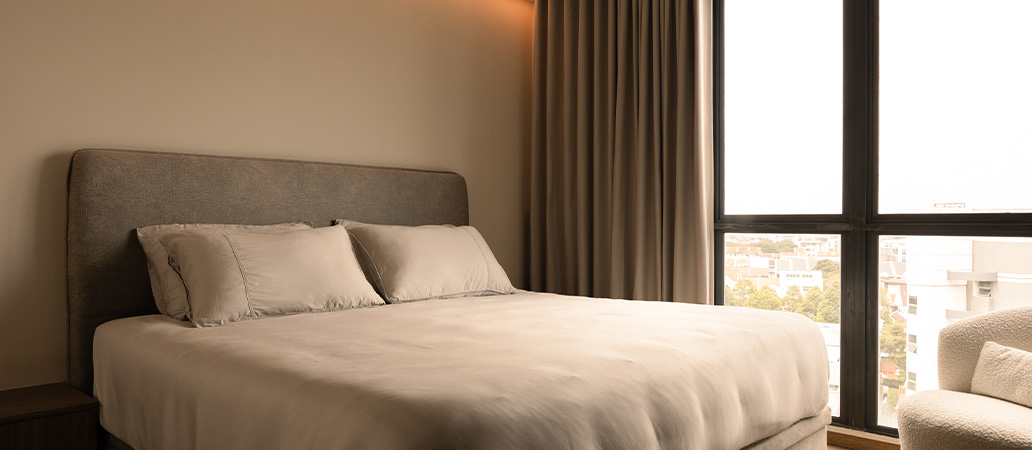
Rooted in Japanese philosophy, wabi-sabi is a worldview that finds beauty in imperfection, impermanence, and simplicity. It values natural materials, subtle irregularities, and the passage of time. Through the wabi sabi design philosophy, surfaces are allowed to age, textures are left unrefined, and spaces feel composed yet unforced. Rather than concealing wear or striving for uniformity, wabi-sabi embraces the character that develops through use, reflecting a more grounded and lived-in approach to design.
Homeowners evaluating luxury interior designer firms in Singapore often face challenges in translating these principles to preserve functionality and suit local lifestyles. Achieving this balance requires careful consideration of spatial planning, material selection, and environmental factors such as humidity, storage constraints, and day-to-day practicality. When thoughtfully applied, wabi-sabi design offers not only a distinct visual language but also a more sustainable and enduring way of living within the realities of Singaporean homes.
1. Jialux Interior Pte Ltd
Jialux Interior stands out among Singapore’s best interior designers for its ability to interpret Wabi-Sabi into a refined, luxury-focused style tailored to modern homes. Rather than adopting a purely rustic interpretation, their approach focuses on controlled material selection, soft tonal layering, and disciplined spatial planning. This ensures that homes feel calm and grounded while maintaining a high level of finish and durability.
Their work showcases organic material-led interiors, where textures such as wood, stone, and muted laminates are carefully balanced with practical needs, like storage, lighting, and spatial flow. As a specialist in residential interior design in Singapore, Jialux also addresses common homeowner concerns, including workmanship quality, renovation coordination, and long-term usability.
Every design decision is translated clearly into buildable outcomes without ambiguity. This reduces the risk of misalignment between concept and execution, which is a common concern in renovation projects. Instead of presenting ideas in isolation, each element is considered as part of a cohesive system that supports both visual clarity and daily functionality.
2. Visionary Interior Design Pte. Ltd.
Visionary Interior Design offers a contemporary interpretation of Wabi Sabi by combining clean architectural lines with warm, natural finishes. Their projects demonstrate careful control of proportion, which is particularly valuable in compact apartments. By simplifying visual elements and maintaining material depth, they create interiors that feel open, calm, and functional. This makes their approach particularly suitable for homeowners who prefer a visually restrained space without compromising on practicality or comfort, thereby placing them among the best interior designers in Singapore for those who value simplicity with clarity.
3. SEIJI Interior
SEIJI Interior draws from Japanese aesthetic principles, interpreting Wabi Sabi through muted palettes and tactile materials. Their designs emphasise clarity and restraint, often removing unnecessary elements to highlight subtle variations in texture and light. By reducing visual noise, their spaces support a slower and more intentional way of living, which can be especially beneficial for homeowners looking to create a sense of separation from the pace of urban life. This results in interiors that feel composed and introspective, suited to homeowners who value a quieter, more intentional living environment.
4. The Local INN.terior
The Local INN.terior interprets Wabi Sabi through a locally grounded lens, incorporating raw finishes and understated detailing. Their work embraces the natural ageing of materials, allowing spaces to develop character over time while maintaining functional layouts. This perspective acknowledges that a home evolves with use, rather than remaining visually static, which can appeal to homeowners who value authenticity over perfection. It resonates with those who appreciate authenticity without compromising everyday usability.
5. Le Interior Affairs
Le Interior Affairs presents a refined interpretation of Wabi Sabi, focusing on balance, proportion, and material harmony. Their interiors often feature restrained palettes paired with carefully considered lighting, creating depth without visual excess. Careful control of lighting and contrast allows surfaces to read with greater nuance, enhancing the overall sense of quiet sophistication without relying on decorative elements. This results in spaces that feel quietly sophisticated and well-composed.
6. TwoThree Design
TwoThree Design places strong emphasis on spatial planning and material layering in their Wabi Sabi-inspired projects. Their work often incorporates natural finishes alongside controlled use of negative space, helping smaller homes feel more open and breathable. This approach is particularly relevant in local apartments, where efficient layout planning directly contributes to comfort and usability, a method supported by research on spatial perception and small space optimisation. Such an approach positions them among the best interior designers in Singapore for homeowners prioritising space optimisation and clarity.
7. Cozyspace
Cozyspace integrates Wabi Sabi principles into warm, approachable interiors. Their designs focus on comfort and simplicity, using neutral tones and natural textures to create relaxed environments. By prioritising ease of use and familiarity, their spaces tend to feel more immediately liveable, which can be appealing for homeowners who value comfort over formal design expression. While less formal in expression, their work still reflects the core ideas behind this design approach, suited to those who prioritise liveability alongside a grounded aesthetic.
8. SG INTERIOR DESIGN
SG INTERIOR DESIGN incorporates Wabi Sabi principles by blending understated textures with modern layouts. Projects subtly draw from traditional Japanese design influences, ensuring that homes remain practical while introducing a sense of calm and cohesion. A balanced approach allows homeowners to integrate character gradually, without overwhelming the space or compromising functionality. This makes them a suitable option for homeowners seeking a balance between character and functionality.
Conclusion
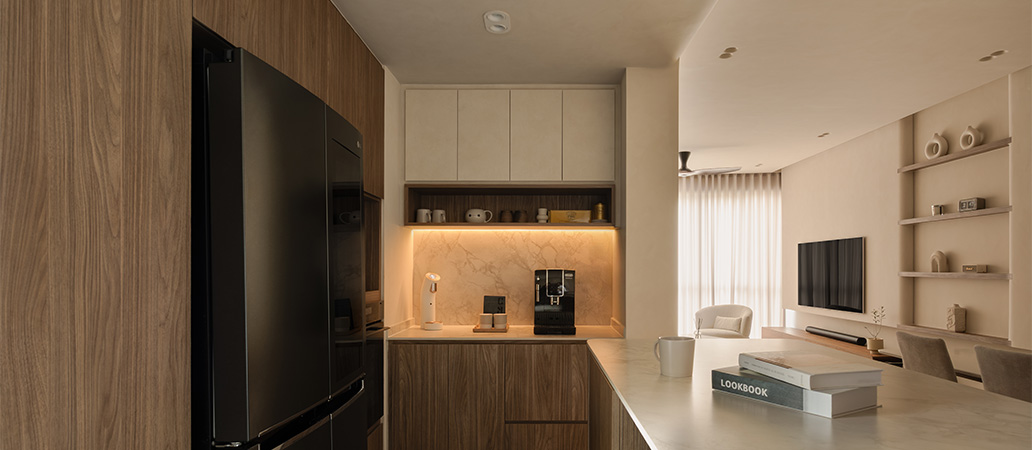
Wabi Sabi interior design in Singapore is less about rustic minimalism and more about thoughtful restraint, material integrity, and spaces that support long-term living. For homeowners evaluating the best interior designers in Singapore, the focus should be on how well a designer can adapt these principles to local needs, from space optimisation to durability in a humid climate. At Jialux Interior, our designs are distinguished by clearly defined, executable solutions that reduce uncertainty throughout the renovation process, resulting in homes that feel composed, refined, and built for long-term living. As a trusted high-end interior design partner, we demonstrate a clear understanding of how understated design can elevate everyday living while staying firmly rooted in practicality.
Contact us today to explore how your space can be thoughtfully planned, refined, and executed with clarity, where every material, detail, and layout decision is aligned with how you want to live.