
Key Takeaways
- Renovating a compact home requires clear prioritisation, as not every space or function can be maximised at the same time without compromise.
- Thoughtful space planning is shaped by daily routines and long-term living needs, rather than by attempting to achieve visual balance across all areas.
- Storage, carpentry, and material choices have the greatest impact when they are integrated with restraint, supporting usability without overwhelming the space.
- A cohesive design approach, guided by durability and clarity rather than feature accumulation, helps smaller homes remain comfortable and relevant over time.
Introduction
Renovating a 3-room BTO flat in Singapore requires a different mindset from larger homes. With fixed layouts, limited floor area, and shared spaces performing multiple roles, every decision carries long-term consequences. A thoughtful 3-room BTO interior design approach is defined not by individual features, but by how well it balances trade-offs in spatial efficiency, daily comfort, material durability, and overall coherence.
Rather than treating each design decision in isolation, effective planning requires homeowners to understand how one choice inevitably shapes another. For homeowners planning to stay long-term, success lies in clarity of priorities rather than attempting to maximise every possible function.
Choosing Between Living Space, Bedroom Size, and Storage Capacity
In most 3-room layouts, space planning is less about achieving balance and more about deciding which areas deserve emphasis. Expanding the living and dining areas often comes at the expense of bedroom size, and increasing storage capacity can similarly reduce openness and circulation. Effective 3-room BTO interior design starts with an honest assessment of daily routines, privacy needs, and long-term lifestyle, particularly during the 3-room BTO renovation planning stage.
These early evaluations help prevent layouts that appear visually appealing at the start but become restrictive once daily routines are established.
Common Spatial Trade-Offs Homeowners Face Include:
- Prioritising living and dining space for shared daily use and hosting
- Preserving bedroom size to support long-term comfort and rest
- Allocating storage without compressing walkways or interrupting sightlines
Because structural layouts are largely fixed, these decisions are about intentional compromise. When priorities are resolved early, spatial limitations are considered rather than corrective.
Built-In Carpentry Versus Loose Furniture
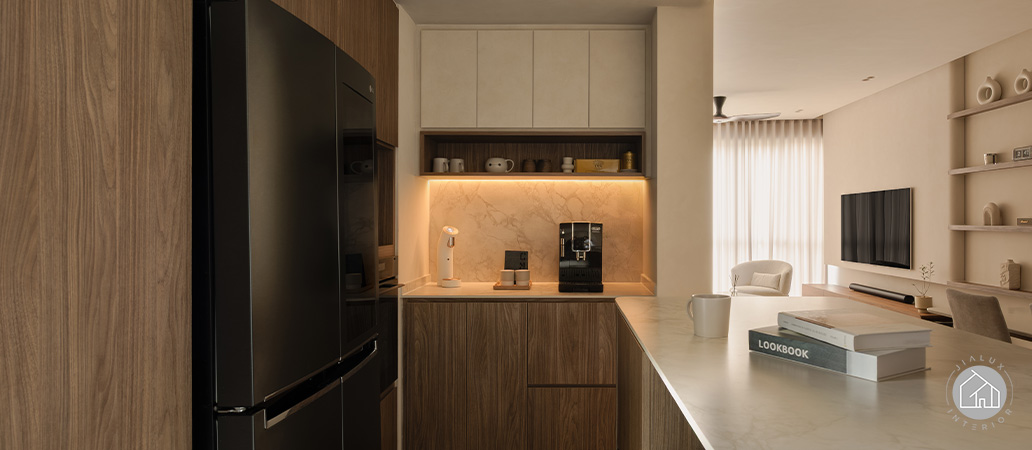
In a 3-room BTO interior design, one of the most impactful decisions is choosing where built-in carpentry will add lasting value and where it is better to preserve flexibility. Built-ins help consolidate storage and maintain visual order, which is particularly important in compact homes. However, committing too extensively to fixed elements can limit adaptability as household needs evolve.
This is especially relevant for homeowners whose routines may change as work patterns, storage demands, or family needs shift over time.
A Measured Approach Often Involves:
- Using built-ins for high-impact zones such as wardrobes and kitchens
- Retaining loose furniture in living areas that may change over time
- Maintaining clear circulation even as storage capacity increases
This balance underscores thoughtful BTO space-planning priorities, allowing functional needs to be met without over-defining the home too early, ensuring the space remains composed without feeling overly rigid.
Storage Planning Without Visual Overload
Storage needs in a 3-room flat are frequently underestimated, particularly for homeowners planning long-term occupancy. Seasonal belongings, work-from-home requirements, and lifestyle changes gradually place pressure on available space.
When addressing interior design considerations for a small BTO, storage should be treated as part of the architectural language rather than an add-on. Even with ample capacity, poorly integrated storage often results in visual clutter and disrupted flow.
Effective Storage Planning Focuses On:
- Integrating storage into wall planes to preserve visual continuity
- Avoiding excessive segmentation that fragments spatial flow
- Planning capacity with future use in mind rather than immediate needs
When storage is integrated with restraint, the home feels calmer and more cohesive, supporting daily routines without visually competing for attention, even as functional demands grow.
Material Durability Within Realistic Budget Constraints
In smaller homes, surfaces are used more intensively, making material selection especially consequential. Flooring, countertops, and carpentry finishes reveal wear more quickly when daily activity is concentrated within compact zones.
A refined 3-room BTO interior design strategy carefully balances upfront costs with long-term performance. This is especially important in the context of BTO interior design in Singapore, where high humidity and frequent daily use call for durable, resilient finishes.
Prioritising materials that age gracefully helps homeowners avoid future rework that can disrupt both comfort and budget planning. Materials that require minimal maintenance support long-term usability and visual consistency over time.
Prioritising Design Coherence Over Feature Accumulation
Compact homes magnify every design decision. Introducing too many finishes, colours, or stylistic references often results in visual fragmentation and reduced usability.
The most enduring 3-room BTO interior design outcomes are defined by restraint. By limiting the palette, repeating key materials, and maintaining consistent detailing, the home feels composed rather than crowded. This restraint allows each material and proportion to be experienced fully rather than diluted by excess.
This emphasis on clarity and proportion reflects the core principles of residential interior design. In HDB homes, modern luxury interior design is defined less by opulence and more by craftsmanship, balance, and thoughtful restraint.
Conclusion
Renovating a 3-room BTO flat is ultimately an exercise in deliberate choice. When space is limited, clarity of priorities, material integrity, and design coherence determine whether a home merely functions or continues to support daily life comfortably over time. The most successful outcomes are shaped not by how much is added, but by how thoughtfully each decision is made within real constraints.
Jialux Interior Pte Ltd works with homeowners navigating these trade-offs by translating spatial limitations, lifestyle considerations, and long-term needs into clear, well-reasoned design decisions. Through an initial design consultation, homeowners are guided to evaluate priorities, assess implications, and move forward with confidence, ensuring that each renovation choice contributes meaningfully to a home designed to endure.