
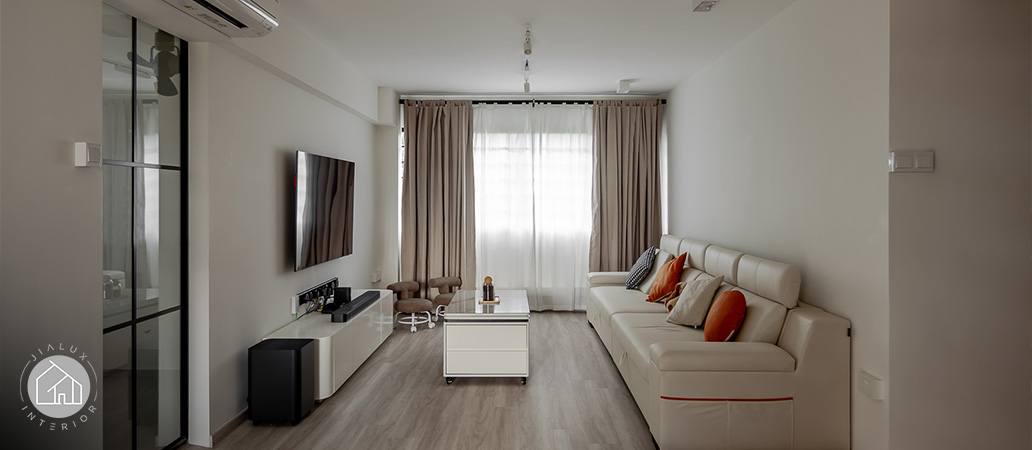
Key Takeaways
- Older resale flats benefit most when design strategies respect their existing layouts and structural constraints, instead of attempting extensive reconfiguration.
- Calm interiors are achieved through restraint and selective refinement, not by removing everything or layering new elements indiscriminately.
- Long-term comfort depends heavily on material choices that prioritise durability, ease of maintenance and visual stability in daily-use areas.
- Spatial continuity and alignment can significantly enhance the overall atmosphere of a home, even when its physical boundaries remain unchanged.
Introduction
Decades-old planning decisions continue to shape older resale flats in Singapore, made long before current lifestyles, storage expectations, and definitions of comfort evolved. Fixed room proportions, ageing finishes, and structural limitations often create uncertainty for homeowners considering renovation. Within this context, a minimalist interior design approach for a 3-room HDB resale flat is not about visual reduction for its own sake, nor about imposing a new identity onto an existing structure. It is about editing with care. Calm emerges when design responds to what already exists, allowing space, light, and material discipline to work together in a way that feels measured, intentional, and suited to long-term living.
Design That Works With Existing Spatial Logic
Older resale flats were planned around practical separation and fixed service routes. Attempting to override this logic through extensive reconfiguration often introduces approval constraints, higher costs, and unforeseen site conditions, alongside visual imbalance. Thoughtful minimalist interior design for a 3-room HDB resale flat works with these constraints, refining alignment and proportion instead of forcing drastic changes. This approach recognises that clarity in older homes is achieved through planning judgement rather than physical overhaul, reflecting a mature understanding of HDB resale interior design.
Why Minimalist Planning Reduces Renovation Risk in Older Flats
Rather than treating structure as an obstacle, minimalist planning uses it as a stabilising framework.
- It avoids unnecessary hacking that adds cost without improving daily use
- It avoids unnecessary ceiling work and preserves existing service routes that are costly to relocate
- It creates order through consistent proportions and visual alignment
By respecting what cannot be changed, the design process becomes more predictable, controlled, and aligned with long-term occupation, rather than short-term visual impact.
Restraint as a Response to Visual Complexity
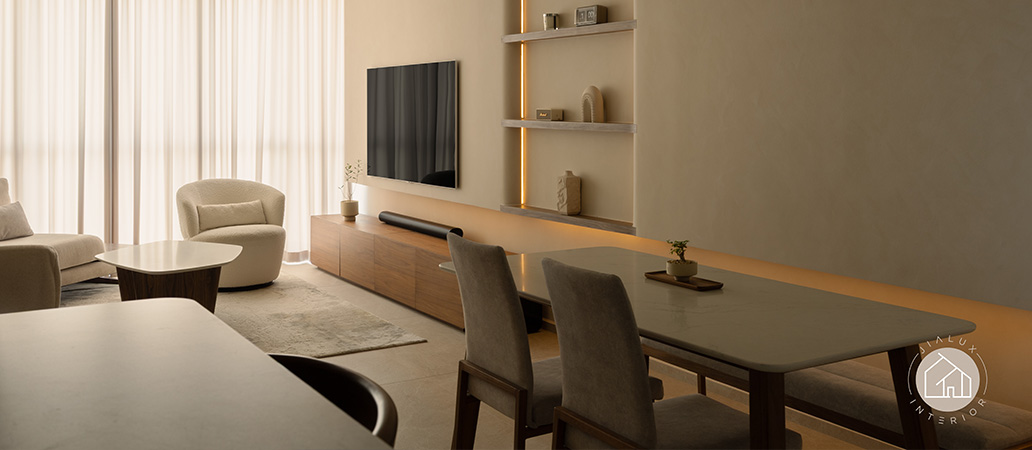
Many resale homes contain layers of finishes and fittings accumulated over multiple decades. Removing everything is rarely necessary and often counterproductive. In minimalist resale flat interior design, restraint becomes a deliberate response to visual overload. The focus shifts to simplifying junctions, reducing competing textures, and clarifying sightlines. What remains is not emptiness, but balance. Spaces feel calmer because decisions are made selectively, allowing refinement to replace excess without erasing the home’s lived-in quality.
Material Choices That Balance Longevity and Budget
Material decisions in 3-room HDB resale flats are closely tied to long-term performance, particularly in homes intended for sustained daily use. Minimalist interior design distinguishes itself here through disciplined material selection, where finishes are chosen for stability, ease of maintenance, and how quietly they age over time. Instead of trend-driven surfaces, understated laminates, durable substrates, and controlled wood tones create a modern, contemporary sensibility that holds its visual integrity. This measured material discipline reflects a luxury mindset where quality is expressed through restraint rather than ornamentation, aligning naturally with modern luxury interior design in Singapore.
Where Durability Matters Most in Older Resale Flats
In older resale flats, durability becomes most critical in areas where daily use, moisture, and physical contact place sustained stress on finishes over time. Rather than treating all surfaces equally, a minimalist approach prioritises material performance in zones that directly affect long-term comfort and maintenance.
- Kitchen worktops and cabinet carcasses, which are regularly exposed to heat, humidity, and frequent handling during daily cooking routines
- Bathroom wall and floor finishes, where prolonged moisture exposure makes low-porosity materials essential for reducing long-term maintenance
- High-touch carpentry fronts such as wardrobes and storage units, where stable finishes help prevent visible wear and premature ageing
Focusing investment here allows the home to mature gracefully rather than require frequent replacement, supporting both visual longevity and practical upkeep.
Continuity That Softens Segmented Layouts
Older flats often feature distinct room separations that interrupt visual flow and make spaces feel smaller. Removing walls outright can be costly and unnecessary. Minimalist interior design for a 3-room HDB resale flat often relies on continuity instead. Through controlled palettes, repeated detailing, and proportional consistency, spaces feel connected even when physically divided. This approach reflects how minimalist interior design in Singapore responds to regulatory and structural realities, achieving calm through coherence rather than reconstruction, while still meeting the expectations of high-end interior design.
Design Techniques That Improve Flow Without Structural Alteration
Visual continuity reduces fragmentation without altering the building fabric.
- Consistent flooring or surface tones across adjoining spaces help reduce visual breaks between rooms, allowing the eye to move smoothly from one area to the next. In older resale flats where rooms are clearly defined, this continuity makes spaces feel calmer and more cohesive without requiring structural changes.
- Repeated carpentry lines that align storage, doors, and feature panels create a sense of order by establishing clear horizontal and vertical references throughout the home. When these elements share the same alignment, the space feels intentionally planned rather than pieced together, even across separate rooms.
- Subtle tonal transitions replace sharp contrast with gradual shifts in shade or material, which softens boundaries between spaces. This approach maintains definition without visual disruption, supporting a composed, modern, contemporary interior that feels balanced rather than segmented.
These decisions subtly improve spatial clarity while respecting existing boundaries, allowing the home to feel composed without compromising structural integrity.
A Thoughtful Interpretation of Existing Architecture
Successful resale interiors are guided by discernment rather than ideology. Understanding what should remain, what can be refined, and what no longer serves the home is central to older HDB resale renovation projects. Minimalism becomes a strategic choice, allowing restraint to feel intentional instead of limiting. Rather than chasing fast-moving renovation trends, this approach prioritises architectural continuity and long-term relevance, resulting in spaces that feel resolved, balanced, and quietly enduring.
Conclusion
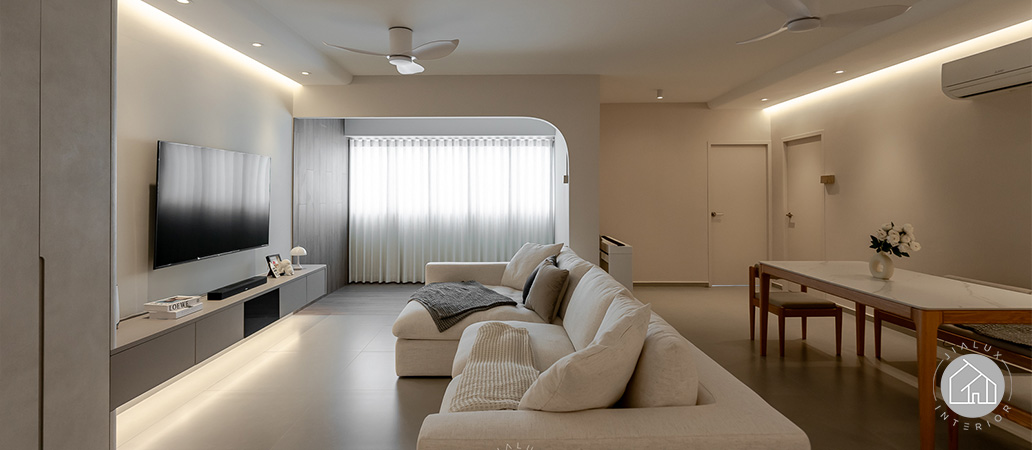
Creating calm within older resale flats requires more than aesthetic restraint. It demands an ability to translate structural realities, ageing conditions, and lifestyle needs into clear design judgement. A 3-room HDB resale flat, when approached with thoughtful minimalist interior design, does not aim to erase the past but to refine it with clarity and intention. Instead, it refines it, shaping homes that feel stable, elevated, and suited to long-term living.
For homeowners navigating the complexities of an older resale renovation, engaging a design partner like Jialux Interior Pte Ltd enables these constraints to be interpreted with intention rather than compromise. Through a measured consultation process, existing structures are assessed, priorities clarified, and design decisions aligned to long-term use, ensuring the outcome feels calm, modern, contemporary, and quietly enduring.