
Key Takeaways
- A well-planned kitchen should support movement, storage, cooking and cleaning, not just look visually attractive.
- Quiet luxury is created through proportion, restraint, alignment and cohesive finishes rather than excessive decorative features.
- Materials should be selected based on durability, maintenance, ageing and daily performance in Singapore homes.
- A lasting kitchen should reflect the homeowner’s lifestyle while connecting naturally with the wider living environment.
Looking Beyond the Visible Parts of a Kitchen
Kitchen renovation planning is often associated with visible choices such as cabinet profiles, countertop finishes, handles, tiles and colour palettes. These elements matter because they shape the first impression of the space, but they are only one part of a well-considered kitchen.
For Singapore homeowners planning an HDB, BTO, condominium or resale upgrade, the kitchen must also support everyday cooking, cleaning, storage and movement. A refined kitchen is not simply one that looks premium at handover. It is one that continues to feel composed, practical and comfortable years later. This is where a thoughtful approach to interior design in Singapore becomes important, because local homes often require careful space optimisation without losing a sense of calm, proportion and quiet luxury.
Planning for Movement, Not Just Appearance
Kitchen renovation planning should begin with how the household moves through the space. A kitchen may look elegant in a drawing, but if the fridge door blocks the walkway, the sink is too far from the preparation area, or two people cannot move comfortably at the same time, daily use quickly becomes frustrating.
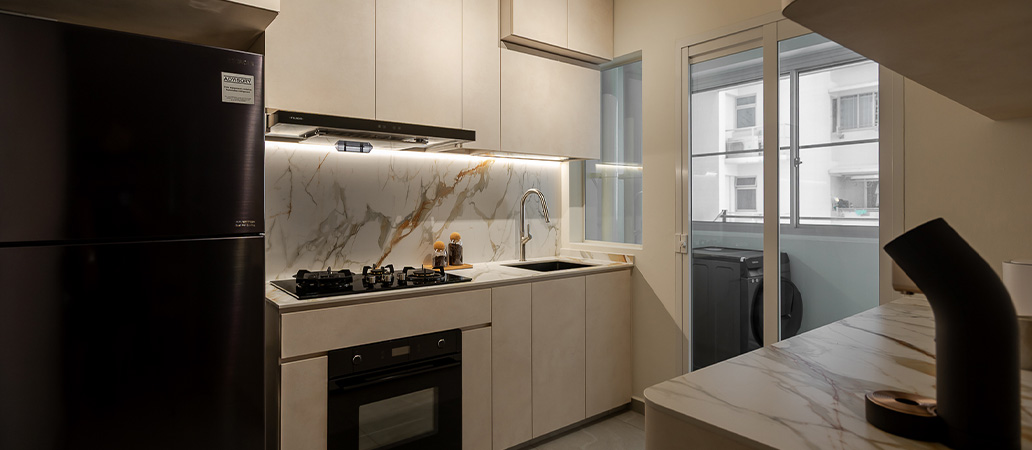
Good kitchen layout planning considers walking paths, appliance positions, cabinet swing space and the relationship between preparation, cooking and washing zones. This is especially important in compact homes, where a 4–room HDB kitchen design needs to balance storage, counter space and circulation within a limited footprint. When movement is planned properly, the kitchen feels intuitive rather than crowded, allowing homeowners to cook, clean and host with less effort.
Proportion and Restraint as Markers of Luxury
Kitchen renovation planning should also consider how much visual detail the space can comfortably carry. Luxury does not always come from adding more features, darker finishes or statement materials. In many modern Singapore homes, a more enduring sense of luxury comes from restraint.
This means aligning cabinet lines carefully, choosing finishes that sit well with the rest of the home, and avoiding visual clutter that makes the kitchen feel heavy. Soft palettes, balanced proportions and well-edited details can create a grounded atmosphere that feels mature rather than trend-driven. For homeowners who prefer quiet luxury, the goal is not to make the kitchen demand attention, but to let it feel naturally integrated, calm and refined.
Material Decisions Shaped by Daily Use
Kitchen renovation planning needs to account for how materials perform under real daily conditions. Kitchens are exposed to heat, moisture, oil, cleaning products and constant handling, so surfaces chosen only for appearance may age poorly or require more upkeep than expected. A functional kitchen design considers whether laminates, worktops, hinges, drawer systems and fittings can support repeated use while retaining their finish and stability.
This is where long–term kitchen design becomes especially valuable, as every material choice affects how the kitchen feels, functions and ages over time. Rather than choosing materials based only on what looks impressive in a showroom, homeowners should think about how each surface will feel, clean and wear over time. A kitchen that stays beautiful with regular use often feels more luxurious than one that looks striking but becomes difficult to maintain.
Relationship Between the Kitchen and the Living Environment
A kitchen should not feel disconnected from the rest of the home. In newer BTO layouts and many resale renovations, the kitchen is often visually linked to the dining or living area, even when it is not a fully open concept. This means the finishes, lighting, lines and proportions should relate to the wider home environment.
Details such as cabinet tones, lighting warmth and flooring transitions can affect whether the kitchen feels integrated or visually separate from the surrounding space. During a BTO home renovation, for example, homeowners may want the kitchen to support everyday cooking while still feeling cohesive with the living space where they relax or host guests. Sightlines matter because the kitchen is often visible from common areas. When transitions are handled thoughtfully, the kitchen does not overwhelm the home. Instead, it contributes to a smoother, more composed living experience.
Interpreting Lifestyle Into Enduring Design Decisions
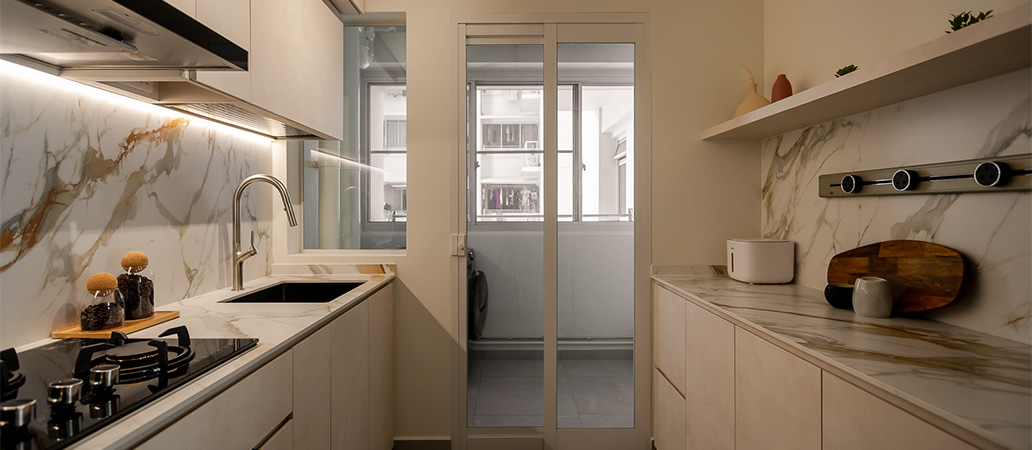
Beyond measurements and materials, a successful kitchen depends on how well the design reflects the household’s actual lifestyle. Some homeowners cook daily and need efficient preparation zones, generous storage and durable surfaces. Others may cook lightly but value a clean, elegant kitchen that supports hosting, coffee routines or family conversations. Resale homeowners may also need deeper planning because older units can involve dated layouts, uneven storage needs or heavier renovation requirements.
These lifestyle differences should be translated into clear design choices, from storage placement and appliance flow to the way materials, workmanship and execution are coordinated. When these habits are considered carefully, the kitchen can feel practical now while remaining relevant as routines change over time. This prevents the kitchen from becoming a collection of attractive features that do not fully support the way the home is lived in.
Shaping a Kitchen That Lasts Beyond First Impressions
Kitchen renovation planning is ultimately about looking beyond surface finishes and understanding how every decision affects daily comfort, durability and long-term satisfaction. Cabinets and countertops may define the kitchen’s appearance, but movement, proportion, material performance, visual continuity and lifestyle fit determine how well the space truly works.
At Jialux Interior, this planning is approached as a translation of complexity into clarity, where spatial constraints, personal routines and refined design expectations are shaped into a kitchen that feels calm, functional and quietly luxurious. This is especially important when design intent, material selection and execution need to come together without creating unnecessary uncertainty for the homeowner. Speak with us to shape a kitchen that brings together refined design, practical flow and lasting quality for your Singapore home.