
Key Takeaways
- Cohesion in larger homes is shaped by how spaces connect and flow, not by treating each room as a separate design statement.
- Visual calm is achieved through disciplined material choices that repeat subtly across the home without feeling uniform or decorative.
- Balance comes from carefully managing scale, structure, and contrast, especially in open and semi-open living areas.
- A whole-home design approach ensures decisions made early continue to support comfort, clarity, and long-term livability.
Introduction
5-room HDB flats offer more space than smaller unit types, but size alone does not guarantee comfort or clarity. In a 5-room HDB interior design, larger layouts introduce a different challenge. The increased scale amplifies both good and poor design decisions, making cohesion a critical design consideration rather than an afterthought. Without a clear spatial and material strategy, generous floor areas can feel fragmented rather than cohesive. Well-designed homes rely on controlled transitions, consistent material logic, and a unified design direction that supports everyday living while expressing refinement through restraint.
Spatial Relationships Shape Cohesion in Larger Layouts
In a 5-room HDB interior design, cohesion begins with how spaces relate to one another rather than how each room is styled individually. Larger footprints increase the risk of over-zoning, where living, dining, and circulation areas become visually disconnected. Cohesive homes maintain continuity by establishing a clear spatial hierarchy that allows the layout to feel intentional and calm, particularly in open living and dining areas where circulation paths often intersect.
Sightlines And Visual Continuity
Establishing clear sightlines helps larger homes feel connected rather than segmented. When key areas align visually, the eye can travel naturally through the home without abrupt stops, reducing visual fatigue over time.
- Major openings are positioned to support visual flow across shared spaces
- Longer views reduce the sense of unnecessary separation
- Circulation feels intuitive rather than interrupted
Proportion And Spatial Hierarchy
Balanced proportions ensure that no single zone feels overly dominant or underdefined. This hierarchy allows public and private areas to coexist comfortably without competing for attention, which is especially important in homes designed for long-term living.
- Living and dining spaces feel anchored rather than oversized
- Private rooms transition quietly from shared zones
- Movement through the home feels deliberate and composed
Avoiding Over-Zoning
Excessive partitions often undermine spatial cohesion in larger flats. Instead, subtle planning cues define zones without fragmenting the overall layout, allowing the home to feel open while remaining functional.
- Furniture placement replaces hard visual barriers
- Ceiling treatments guide spatial boundaries gently
- Open connections preserve flow while maintaining function
Material Continuity Creates Visual Stability Across Rooms
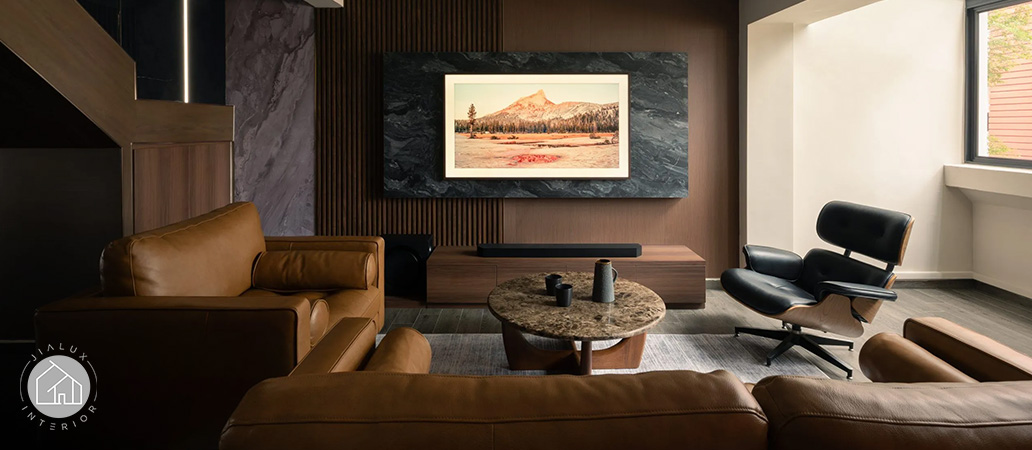
As homes increase in size, material inconsistency becomes more noticeable. A cohesive 5-room HDB interior design relies on a controlled material language that appears throughout the home in varied but related ways. Within large HDB interiors, this approach provides visual stability without making the space feel repetitive or overly styled.
Material continuity is typically achieved through restraint rather than uniformity, allowing materials to support the overall spatial structure rather than dominate it.
- Similar wood tones recur across carpentry, flooring, and feature elements
- Surface textures remain consistent, such as matte finishes or softly grained laminates
- Colour variation stays within a narrow tonal range to avoid visual disruption
In the context of HDB interior design in Singapore, this measured repetition anchors the home visually while allowing individual rooms to express their purpose quietly, supporting both daily use and long-term durability.
Managing Visual Weight in Open and Semi-Open Areas
Larger HDB flats often combine open communal areas with enclosed private rooms, creating shifts in visual weight. In a 5-room HDB interior design, cohesion depends on how scale, structure, and emphasis are distributed across these zones so the home feels balanced rather than uneven.
Furniture Scale And Balance
Furniture size plays a critical role in how space is perceived. Appropriate scale ensures that open areas feel grounded rather than empty or overwhelmed, contributing to a sense of visual calm associated with luxury interiors.
- Oversized pieces can dominate shared spaces unnecessarily
- Underscaled furniture creates visual uncertainty
- Proportion supports comfort and long-term use
Ceiling And Feature Distribution
Ceiling treatments help anchor spaces without overwhelming them. Selective emphasis allows key zones to stand out while preserving visual calm across the larger layout.
- Feature ceilings are reserved for primary areas
- Repetition is avoided to maintain clarity
- Visual focus feels intentional rather than decorative
Introducing Contrast Without Disruption
Contrast adds character when applied with control. Subtle Modern Industrial detailing can introduce structure without breaking cohesion, particularly when balanced against softer materials.
- Fine metal accents provide definition
- Linear elements support spatial order
- Contrast complements rather than competes
This balanced approach supports thoughtful 5-room HDB renovation design, maintaining visual calm throughout everyday living spaces.
Luxury Expressed Through Restraint Rather Than Excess
In spacious HDB homes, luxury is defined less by statement pieces and more by control. A refined 5-room HDB interior design prioritises visual quiet, measured detailing, and comfort that endures over time. Modern Luxury and Modern Contemporary interiors rely on proportion, material quality, and consistency rather than overt display, allowing the home to feel elevated without visual noise.
Within residential interior design in Singapore, this restraint reflects a growing preference for homes that feel grounded and timeless. When design decisions support clarity and longevity, the space feels elevated without appearing performative or trend-driven.
Whole-Home Design Alignment From Concept to Completion
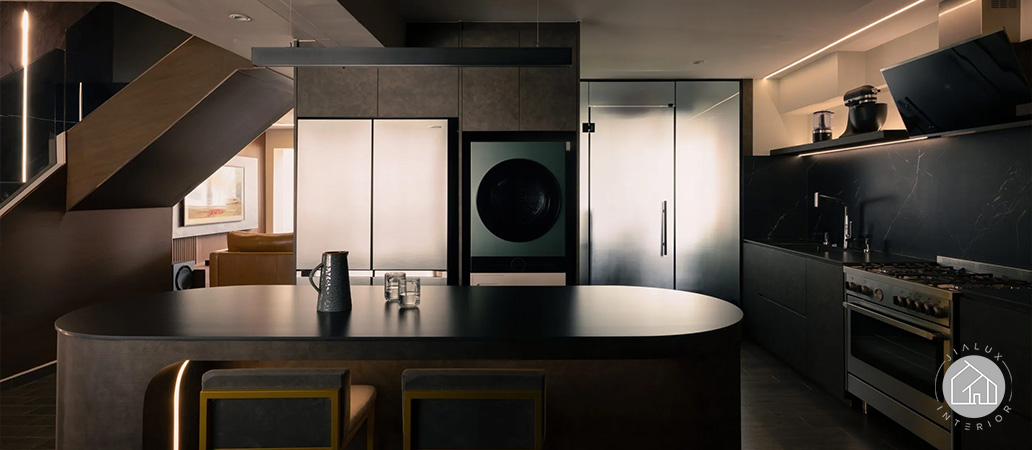
Maintaining cohesion across a larger flat requires treating the home as a single environment rather than a collection of rooms. Cohesive home interior planning ensures that spatial decisions, material choices, and detailing work together from the outset, reducing the risk of mismatched outcomes during renovation.
This alignment typically involves:
- Space planning that anticipates daily movement and long-term use
- Material selections evaluated across the entire home rather than room by room
- Consistent detailing that avoids visual breaks and unresolved junctions
Within the Singapore interior design context, this holistic perspective is especially important for larger layouts, where inconsistencies become more noticeable as the home is lived in over time.
Conclusion
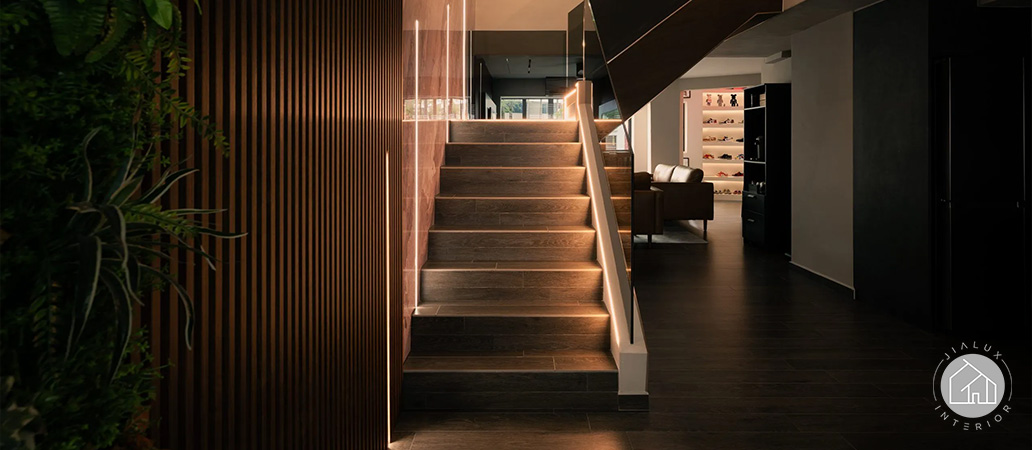
Cohesion in a 5-room HDB flat is not achieved through decoration alone. It is shaped by how space, materials, and visual weight are considered together as a single environment. When these elements are aligned with restraint and clarity, larger homes feel composed, timeless, and genuinely comfortable to live in over time.
For homeowners planning a 5-room renovation, the ability to interpret spatial complexity early on makes a lasting difference. Clear design direction helps transform scale into structure, ensuring that daily movement, material choices, and visual balance work together seamlessly.
By approaching design as a process of interpretation rather than prescription, Jialux Interior supports this clarity from the outset. Homeowners planning a 5-room renovation can begin with a design consultation to assess layout potential, material direction, and long-term usability before renovation decisions are finalised.