
Introduction
1.1. Why Quiet Luxury Aligns Naturally with Resale 3-Room HDB Living
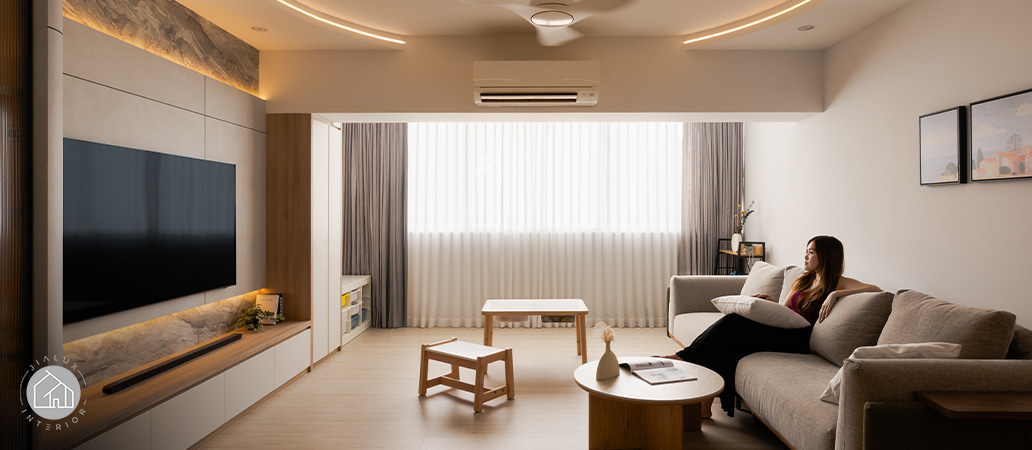
Resale 3-room HDB flats in mature Singapore estates are often selected for their location, established amenities, and sense of community rather than for novelty or scale. Buyers are typically drawn to neighbourhoods they already understand, where daily routines, transport access, and long-term convenience are familiar and dependable. In this context, expectations for 3-room resale HDB design are shaped less by trend adoption and more by how well a home supports daily living over time.
Unlike BTO interior design in Singapore, which usually focuses on standardised layouts and first-time homeowners, resale flats require a more adaptive design approach that responds to existing structures and lived-in contexts. This shift introduces a layer of complexity that demands careful interpretation rather than surface-level styling, particularly in older flats where proportions, circulation, and material transitions must be resolved with precision.
Homeowners moving into these flats tend to have a clearer sense of how they want their space to function. Instead of chasing visual statements, many prioritise calm, order, and durability—qualities that closely align with the principles of well-designed 3–room resale HDB flats. The emphasis shifts towards creating interiors that feel considered, proportionate, and quietly refined, where quality is expressed through restraint rather than display.
Quiet luxury resonates in this context because it values restraint, balance, and comfort over decorative excess. In compact layouts, every decision carries weight. Proportion, circulation, and material selection directly influence how spacious and composed a home feels over time. When these elements are resolved cohesively, the result is a living environment that feels grounded and assured.
This article explores how quiet luxury can be applied thoughtfully within the constraints of mature resale flats, showing how careful planning and material discipline can result in interiors that feel refined, enduring, and quietly confident. It examines how complex spatial and structural considerations can be translated into homes that feel resolved, elegant, and deeply aligned with long-term living.
Key Takeaways
- Quiet luxury in compact homes is defined by how spaces support daily living over time, where comfort, clarity, and spatial intention matter more than decorative statements or trend-driven features.
- Thoughtful planning that prioritises circulation, proportion, and adaptability translates limited space into an environment that feels composed, intuitive, and comfortable for long-term living.
- Material consistency, calibrated lighting, and integrated storage work together to create interiors that feel restrained yet refined.
- In mature estates, the most successful homes emerge when existing structural conditions are carefully interpreted rather than resisted.
PART 2 – Interpreting Quiet Luxury Within 3 Room Resale HDB Constraints
2.1. Quiet Luxury as a Function of Spatial Behaviour
Spatial Calm as an Experiential Outcome
Quiet luxury is expressed through how residents move through and experience a home, rather than through overt stylistic features. For a 3–room resale HDB design, this means prioritising how the space is used rather than focusing solely on decoration. When layouts feel intuitive, and zones transit naturally, daily routines require less conscious effort and feel more fluid.
Circulation that follows a logical sequence reduces friction. Clear sightlines, well-positioned openings, and unobstructed pathways allow spaces to feel composed even within compact footprints. When these elements come together, they form the foundation of a quiet luxury HDB interior, reflecting broader principles of residential interior design in Singapore.
The Effect of Spatial Misalignment in Smaller Homes
In smaller flats, minor planning issues are quickly amplified. Awkward door swings, tight clearances, or competing focal points can disrupt flow and make spaces feel unsettled. In a 3–room resale HDB flat, design inconsistencies are more noticeable because there is less visual and physical buffer to soften their impact.
Quiet luxury addresses this by focusing on alignment, proportion, and visual continuity. Consistent datum lines, carefully scaled furnishings, and coordinated finishes help spaces read as intentional and cohesive rather than piecemeal, reinforcing a disciplined design approach.
Emotional Impact on Residents
When spatial organisation is clear and purposeful, residents experience a greater sense of calm and order. This clarity reduces visual noise and mental fatigue, allowing the home to support rest and daily routines without constant adjustment or compromise. Over time, this sense of stability becomes a defining quality of quiet luxury, where comfort is sustained through thoughtful planning rather than continuous refinement or change.
2.2. Mature Estate Conditions That Shape Design Decisions
Structural Realities of Older 3 Room HDB Flats
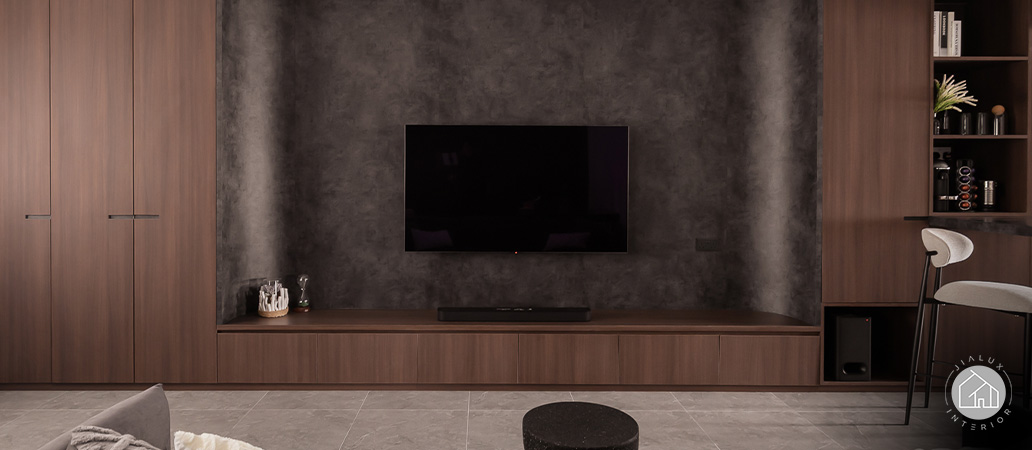
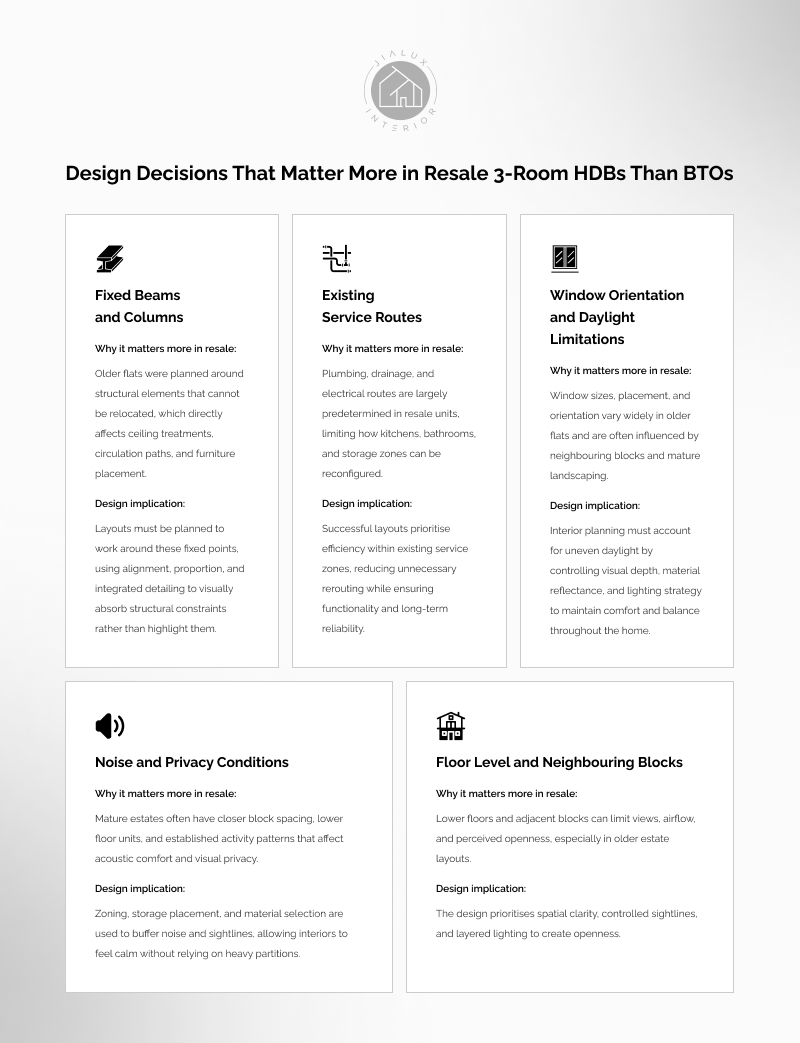
Older resale flats have fixed structural elements, making the 3–room resale HDB design a careful exercise in working within defined limits. Beam positions, columns, and existing service routes often restrict extensive reconfiguration. Ceiling height variations and original window proportions affect daylight penetration, ventilation, and the perceived openness of each space. This calls for an approach to older HDB flat design that works with the existing structural logic rather than against it.
These constraints are key considerations in the renovation of 3-room resale HDB flats, influencing how layouts, services, and material choices are planned from the outset. HDB renovation regulations further shape what can be altered. Structural walls cannot be removed, and wet area modifications require strict approvals. Pipe and drainage locations are also largely fixed, influencing kitchen and bathroom layouts. Within these constraints, thoughtful planning becomes an exercise in precision rather than limitation.
Environmental Context of Mature Estates
Mature estates feature dense greenery, closely spaced blocks, and established urban surroundings. These external conditions affect privacy, natural light, and acoustic comfort within the flat. Unlike newer developments, these factors are shaped by long-standing neighbourhood patterns that cannot be designed away.
These environmental factors form the foundation of interior design in mature HDB estates, where comfort, privacy, and visual balance are shaped by long-standing neighbourhood conditions rather than by blank-slate planning. Design responses that acknowledge this context tend to feel more settled rather than imposed.
Interiors that respond through softened lighting, controlled contrasts, and balanced zoning tend to feel more coherent. Rather than resisting the environment, successful 3–room resale HDB design works with these conditions to create interiors that feel grounded and appropriate.
How These Conditions Define Design Priorities
Given these constraints, priorities naturally shift towards functional flow, comfort, and durability. Dramatic gestures or novelty-driven features often add complexity without long-term benefit.
Quiet luxury proves effective when it complements the flat’s inherent characteristics. By respecting structural realities and environmental context, the design feels resolved rather than imposed. Luxury is expressed through proportion, material judgement, and spatial calm, allowing the home to age gracefully alongside its occupants.
2.3. Luxury in Compact Homes as an Exercise in Restraint
Over-Design as a Common Challenge
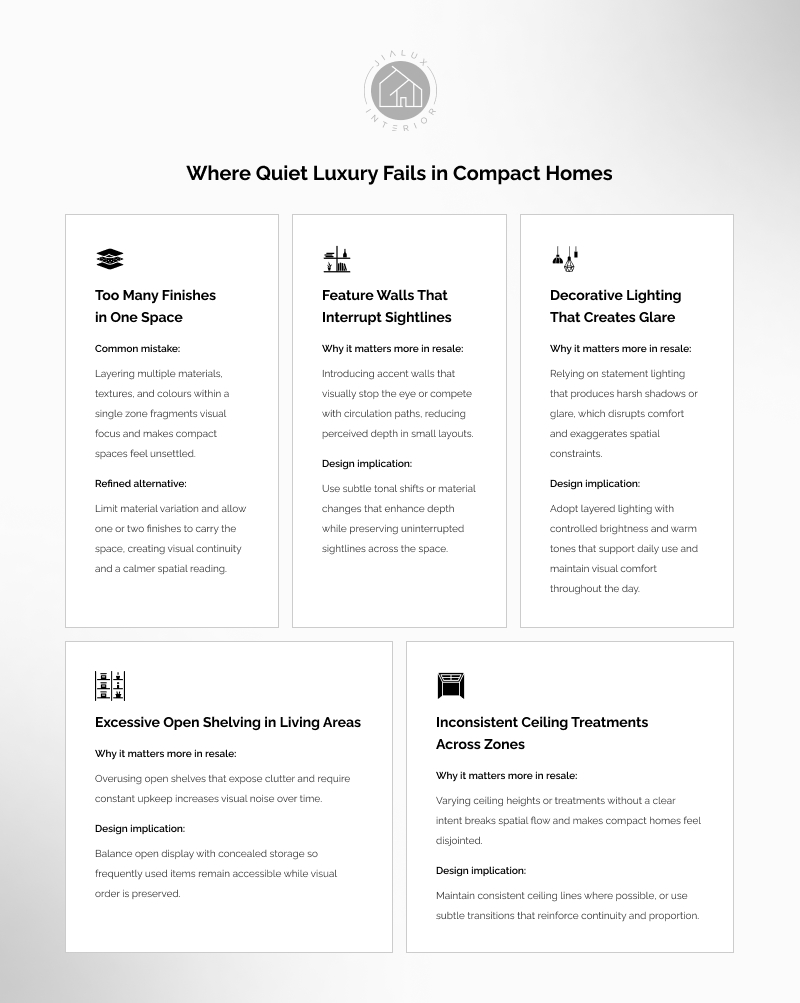
One of the most common issues in compact homes is over-design. Excessive material changes, decorative layering, or competing finishes can fragment limited space and create visual fatigue over time. In smaller layouts, each additional element carries disproportionate visual weight.
Restraint as a Measure of Design Confidence
In smaller homes, luxury is expressed through careful curation rather than accumulation. For 3–room resale HDB flats, a restrained design approach lets detailing, proportion, and material quality take centre stage. Maintaining consistency across surfaces and junctions helps the entire interior read as unified and intentional.
Long-Term Relevance
Design restraint also supports longevity. When choices are grounded in function and clarity rather than trends, the home remains visually calm and adaptable as lifestyle needs evolve.
PART 3 – Design Mechanisms That Support Quiet Luxury in 3-Room Resale HDB Flats
3.1. Planning for Daily Rhythm and Long-Term Occupation
Movement Patterns and Circulation Clarity
Homes feel noticeably calmer when movement between the entrance, living, dining, and private areas follows a clear and intuitive sequence. In the design of 3–room resale HDB flats, circulation clarity is critical because compact layouts leave little room for adjustments once construction is complete.
This emphasis on clarity is central to planning interiors for compact resale flats, where circulation and zoning must support daily activities without the luxury of excess space. Here, spatial decisions are not cosmetic but structural, shaping how the home is experienced from morning routines to evening rest.
Simplified circulation also reduces visual congestion. Clear movement lines allow spaces to feel more open and balanced, even when the overall floor area is limited. This clarity supports quiet luxury by removing unnecessary friction from everyday living.
Zoning Without Excessive Partitions
Especially in 3–room resale HDB designs, functional zones can be clearly defined without relying on solid walls or heavy dividers. Instead, proportion, alignment, ceiling treatment, and furniture placement play a critical role in shaping how the space is used every day.
This approach preserves visual continuity while still supporting privacy and acoustic comfort. Subtle transitions between zones allow the home to function intuitively, reinforcing a sense of order without visually breaking the interior into smaller fragments.
Planning for Evolving Household Routines
Well-considered layouts account for changing lifestyle needs over time. Spaces may need to accommodate hybrid work arrangements, additional storage, or shifting family dynamics. In compact homes, this adaptability must be planned from the outset rather than introduced as an afterthought.
JiaLux Interior Pte Ltd approaches spatial planning with long-term relevance in mind, ensuring that layouts remain adaptable rather than fixed to one lifestyle stage, reflecting the discipline of a luxury interior design firm, where spatial decisions are guided by durability, usability, and lifecycle thinking rather than short-term visual trends.
3.2. Material Strategy as a Foundation for Quiet Luxury
Material Continuity Across the Interior
Consistency in material application helps compact interiors feel composed and intentional. When finishes are repeated across walls, floors, and cabinetry, the eye moves smoothly through the space without interruption. This visual continuity allows the interior to read as a single, resolved environment rather than a collection of individual elements.
This reflects principles commonly associated with modern luxury interior design in Singapore, where restraint, material integrity, and longevity matter more than decoration.
This continuity is especially important in the design of 3–room resale HDB flats, where fragmented finishes can quickly make the home feel smaller and visually unsettled. Cohesive material palettes allow the interior to feel calm and spatially unified.
Tactile Quality and Durability
Materials are chosen not only for appearance but also for how they perform in a thoughtful 3-room resale HDB design. Surfaces that feel comfortable to the touch and age gracefully contribute to long-term satisfaction. Over time, this tactile reliability reinforces quiet confidence.
Durability matters most in high-use areas such as kitchens, living spaces, and storage systems. Here, luxury is measured by longevity rather than first impressions
Visual Depth Through Subtle Variation
Quiet luxury does not rely on stark uniformity. Instead, tonal shifts and texturesintroduce depth withoutvisual noise. Slight variations in grain or sheen add richness while maintaining restraint, allowing interiors to feel refined rather than decorative.
3.3. Lighting as an Environmental Regulator
Addressing Uneven Daylight in Older Flats
In many mature 3-room HDB flats, window placements result in uneven natural light distribution, a common constraint that shapes 3–room resale HDB design decisions from the outset. Some areas may receive ample light while others remain dim, affecting comfort and balance. Artificial lighting must therefore compensate carefully. Poorly planned lighting can create glare or harsh contrast that undermines spatial calm.
Layered Lighting for Functional and Emotional Comfort
A layered approach combines ambient, task, and accent lighting to support different activities throughout the day. When calibrated carefully, these layers work together rather than competing for attention.
This flexibility allows the home to transition seamlessly from morning routines to evening relaxation and social gatherings. Lighting becomes a quiet facilitator of daily rhythm, supporting movement, rest, and interaction without drawing focus to itself.
Enhancing the Perception of Luxury
Well-calibrated lighting enhances material textures, reveals spatial depth, and reinforces a sense of composure. In a 3–room resale HDB design, lighting should be integral rather than a decorative afterthought.
JiaLux Interior Pte Ltd approaches lighting as a system that supports both function and atmosphere in equal measure.
3.4. Integrated Storage That Supports Calm and Order
Concealed and Cohesive Solutions
In 3–room resale HDB designs, where spatial discipline is essential, storage that aligns with architectural lines plays a key role in reducing visual clutter. When cabinetry is integrated seamlessly into walls or transitional zones, it supports openness rather than competing for attention, allowing compact interiors to feel visually settled and well resolved.
This principle is central to HDB resale interior design, where storage is designed to work quietly in the background, preserving order without overwhelming the limited wall or floor space. When handled with restraint, storage contributes to a sense of visual calm that is associated with refined interiors rather than purely utilitarian solutions.
Functional Efficiency Without Compromise
Integrated storage supports daily routines by keeping essential items accessible while maintaining a composed environment. In a 3–room resale HDB flat design, efficient internal layouts keep storage practical and intuitive, ensuring it doesn’t encroach on living areas or disrupt circulation. Careful planning allows storage to support everyday use while remaining visually discreet.
Contribution to Long-Term Comfort
Thoughtfully planned storage allows interiors to remain orderly as household needs evolve. By preventing clutter accumulation and preserving spatial clarity, integrated solutions reinforce the principles of quiet luxury and support comfortable living over the long term.
JiaLux Interior Pte Ltd translates functional requirements, spatial limitations, and long-term lifestyle considerations into storage solutions that feel intentional, refined, and seamlessly integrated into the overall interior experience.
Questions You Might Ask
1. Is quiet luxury compatible with the practical needs of a resale 3-room HDB flat?
Yes. Quiet luxury supports practicality by prioritising clarity in layout, efficient zoning, and integrated storage solutions. In the context of 3-room resale HDB design in Singapore, this approach allows compact homes to function smoothly for everyday activities, including cooking, working from home, and hosting guests. Spaces are organised to reduce friction, allowing movement and use to feel natural without visual clutter or unnecessary complexity.
2. Does quiet luxury limit personal expression in interior design?
No. Quiet luxury provides a structured framework within which personal expression can sit comfortably. Homeowners can introduce carefully chosen furniture, artwork, or subtle colour accents that reflect their preferences. Whether influenced by modern contemporary sensibilities or restrained rustic industrial touches, these elements are integrated in a way that preserves balance and visual calm rather than overwhelming the space.
3. How does JiaLux Interior Pte Ltd ensure quiet luxury does not feel generic?
JiaLux Interior Pte Ltd approaches each 3-room HDB resale design by responding to the specific conditions of the flat and the lifestyle of its occupants. Spatial planning, material selection, and lighting design are shaped by factors such as orientation, natural light, and existing structural constraints. This ensures that quiet luxury is experienced as a tailored outcome that reflects how the household lives, rather than a standardised look applied across different homes.
4. Is quiet luxury suitable for homeowners intending to stay long-term?
Yes. Quiet luxury is well-suited for long-term occupation because it emphasises durable materials, adaptable layouts, and design choices that remain relevant over time. By focusing on function and proportion instead of short-lived trends, the home continues to feel comfortable and composed as household needs evolve, which is especially important for long-term living in Singapore’s mature HDB estates.
Conclusion
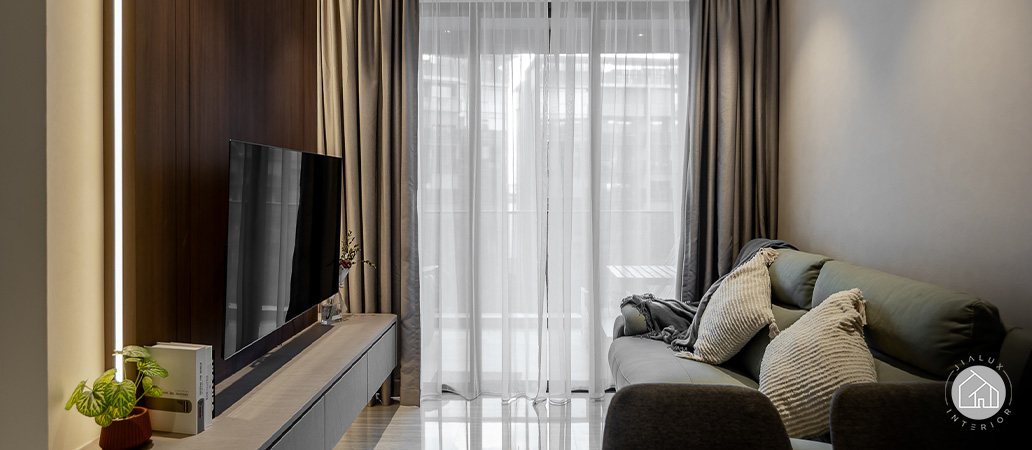
In Singapore’s mature estates, 3–room HDB resale designs benefit most from an approach grounded in clarity, restraint, and long-term suitability rather than short-term visual impact. These homes are often chosen for stability, familiarity, and established surroundings, which makes thoughtful planning and spatial resolution more important than overt stylistic expression alone.
Quiet luxury supports everyday living by focusing on considered layouts, cohesive material selection, calibrated lighting, and integrated storage that work together as a complete system. Whether a homeowner gravitates towards modern contemporary sensibilities or introduces subtle rustic industrial influences, the emphasis remains on balance, proportion, and material integrity rather than excess. This allowscompact flats to feel calm, purposeful, and comfortable over time.
By prioritising composure over spectacle, quiet luxury transforms smaller interiors into homes that feel resolved and quietly refined. Design decisions are guided by how spaces are used and experienced daily, ensuring that interiors continue to support evolving routines without requiring frequent updates or visual reworking.
JiaLux Interior Pte Ltd brings this philosophy into practice by translating structural constraints, lifestyle needs, and material considerations into interiors that feel intentional and refined. Their designs for 3–room resale HDB flats demonstrate how functional efficiency and aesthetic restraint can coexist, resulting in spaces that are both practical and elevated.
For homeowners planning a 3-room resale HDB renovation in Singapore, JiaLux Interior Pte Ltd offers professional guidance from concept through completion, working closely with clients to create homes that feel composed, enduring, and aligned with how they live. This approach ensures that the outcome delivers lasting comfort, spatial clarity, and a refined sense of quiet luxury.